The Pain Point of Traditional TPH Materials: Why It Was Difficult to Compete with Imported Products?
TPH is an improved material based on PVC, which solves the problem of poor flexibility of traditional PVC paint protection films by adding plasticizers and a small amount of polyurethane components
-
Poor Weather Resistance: Under long-term ultraviolet radiation, the molecular structure of traditional TPH is easily damaged, leading to yellowing, brittleness and cracking. The QUV accelerated aging test shows that the UV resistance of ordinary TPH is only about 500 hours, and obvious yellowing will occur in 2-3 years of useInsufficient Protective Performance: The impact resistance and scratch resistance are relatively weak. In the actual test, a 50g small stone can penetrate the film at a speed of 60km/h, and it has no self-healing ability. Minor scratches cannot be repaired automaticallyUnstable Adhesive Layer: The quality of the adhesive used in low-end TPH is uneven. Under extreme temperature conditions (-30℃ to 80℃), it is easy to cause degumming, residual glue or edge warping, which even damages the original car paintThe fundamental reason for these problems lies in the backwardness of the base material formula and modification technology. In the early stage, the core technology of TPH modification was monopolized by foreign enterprises such as the United States and Germany, and domestic products could only rely on low-cost competition, forming the impression of “low quality and low price” in the market.
Core Breakthrough of Domestic Modification Technology: Four Key Directions to Catch Up with Imported Products
In recent years, domestic enterprises have increased investment in R&D and achieved key breakthroughs in TPH modification technology by absorbing international advanced experience and carrying out independent innovation. These technological upgrades have directly promoted the performance of domestic TPH materials to a new level, laying the foundation for competing with imported products:1. Modification of Base Material Formula: Improving Stability from the Molecular Level
The core of domestic TPH modification is the optimization of the base material formula. Unlike the traditional simple blending method, domestic enterprises have achieved precise control of material performance by adjusting the ratio of soft and hard segments and introducing high-performance monomers:-
Introduction of Aliphatic Polyurethane Segments: By adding aliphatic polycaprolactone TPU components with stable molecular structure, the weather resistance of the material is significantly improved. The ester groups in the molecular chain are replaced by more stable urethane groups, which can resist the erosion of water molecules and ultraviolet rays. The UV resistance of the modified TPH can reach more than 1500 hours in the QUV test, which is comparable to that of mid-range imported TPHOptimization of Plasticizer System: Abandoning the traditional small-molecule plasticizers that are easy to migrate, adopting environmentally friendly macromolecular plasticizers, which not only ensures the flexibility of the material but also avoids the problem of brittleness caused by plasticizer migration after long-term use. The modified TPH can still maintain good flexibility even in the low-temperature environment of -40℃
2. Innovation of Coating Technology: Endowing the Film with Multiple Functional Properties
The surface coating is the “first line of defense” of the paint protection film. Domestic enterprises have achieved a qualitative leap in the functional performance of TPH films through the development of composite coating technology:-
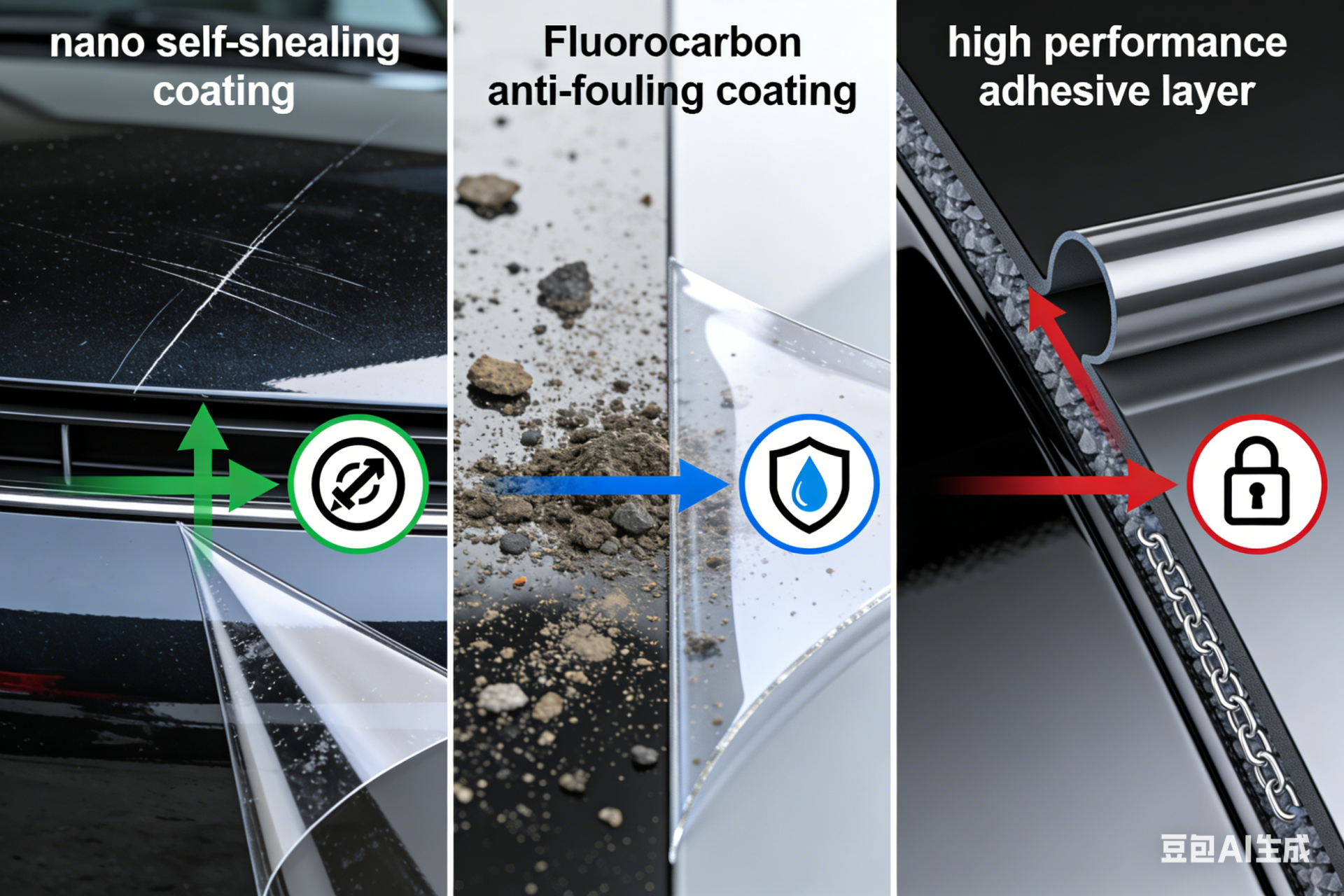
Nano Self-healing Coating: The introduction of nano-polymer materials into the coating forms a flexible cross-linked structure. Minor scratches (such as those caused by branches and sand) can be automatically repaired within 48 hours at room temperature (25℃) with a repair rate of over 90%Fluorocarbon Anti-fouling Coating: The application of fluorocarbon materials improves the surface energy of the film, forming a “lotus leaf hydrophobic effect”. It can effectively resist the adhesion of bird droppings, tree gum, acid rain and other pollutants. The test shows that the residual rate of pollutants on the surface of the modified TPH film is only 0.3% after 72 hours of exposure
3. Upgrade of Adhesive Technology: Ensuring Long-term Stable Bonding
The adhesive layer is the key to the service life of the paint protection film. Domestic enterprises have solved the pain points of traditional TPH adhesives by cooperating with international well-known adhesive brands (such as Ashland in the United States) and developing customized adhesives:-
Adopting High-performance Pressure-sensitive Adhesives: Using one-component reactive curing pressure-sensitive adhesives, which have good temperature resistance and weather resistance. They can remain stable under the extreme temperature cycle of -40℃ to 120℃, without degumming or residual glueOptimization of Coating Process: The use of precision micro-gravure coating technology ensures the uniformity of the adhesive layer (thickness error ≤0.5μm), which avoids edge warping caused by uneven adhesive coating and improves the fitting degree of the film
4. Improvement of Production Process: Guaranteeing Product Consistency
In addition to formula modification, domestic enterprises have also upgraded the production process, which has significantly improved the consistency and stability of products:-
Precision Calendering Technology: The use of imported precision calendering equipment ensures that the thickness of the film is uniformly controlled in the range of 7-8mil (the golden thickness range for paint protection films). The error is less than 0.5mil, avoiding the problem of uneven thickness of traditional TPH filmsStrict Quality Control System: Establishing a full-process quality control system from raw material inspection to finished product testing. Each batch of products must pass tests such as impact resistance, scratch resistance, weather resistance and adhesive performance before leaving the factory. The qualified rate of products is over 99.5%
Domestic vs. Imported: Data Speaks for the Gap Narrowing
With the above technological breakthroughs, the performance of domestic TPH materials has been significantly improved, and the gap with imported products has been continuously narrowed. The following is a comparative analysis of key performance indicators between domestic modified TPH and mid-range imported TPH:It can be seen from the data that in terms of core performance indicators, domestic modified TPH has approached mid-range imported products, while in terms of price, it has obvious advantages. This high cost-performance ratio has become the core competitiveness of domestic TPH materials in the global market.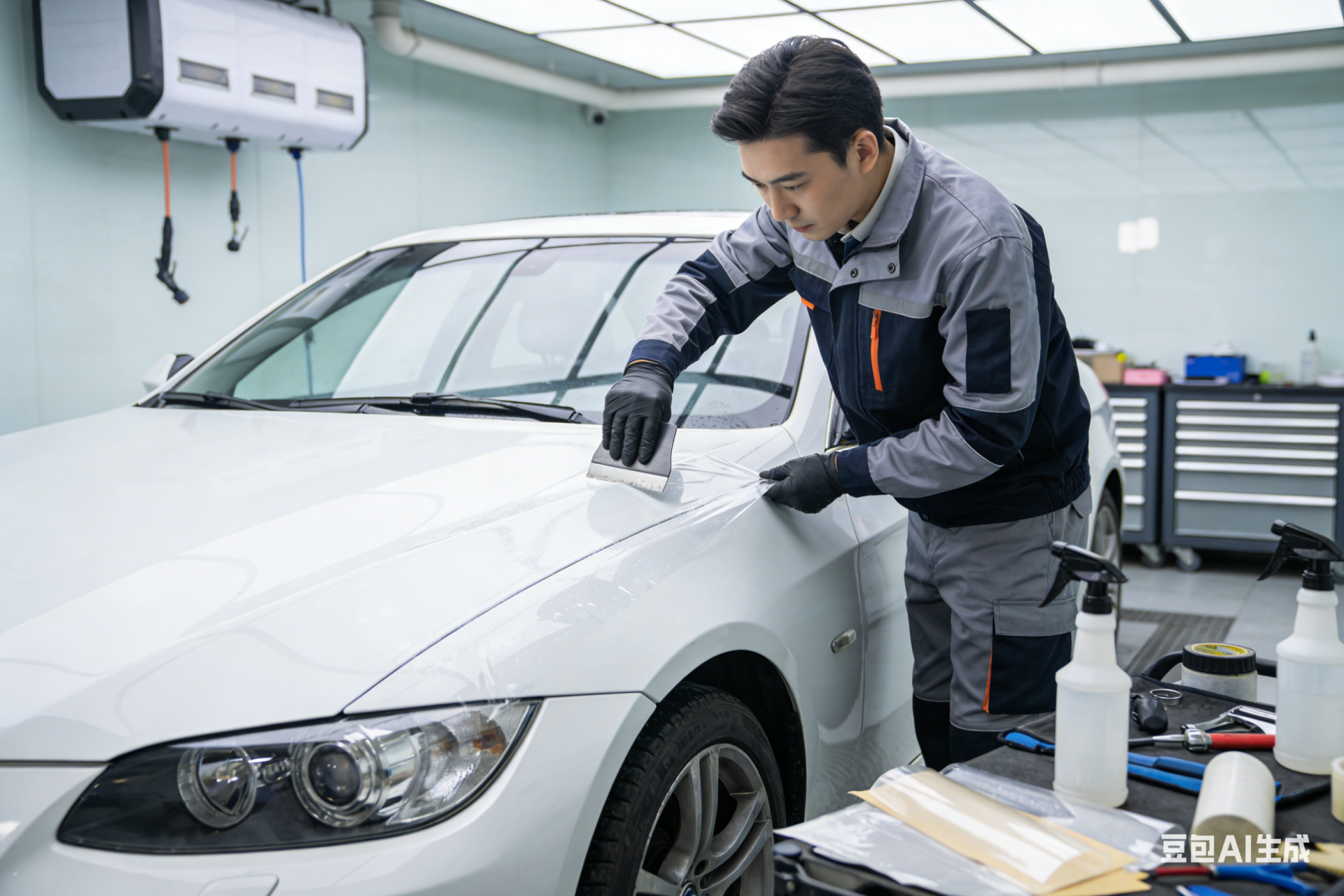
Future Trend: Modification Technology Drives TPH to Move Towards High-end
With the continuous development of the global automotive aftermarket, consumers’ demand for paint protection films is constantly upgrading, and TPH materials are also facing the trend of high-endization driven by modification technology-
Environmentally Friendly Modification: Replacing traditional petroleum-based materials with bio-based materials to develop recyclable TPH films, responding to the global environmental protection trend and meeting the needs of environmentally conscious consumersFunctional Integration: Integrating heat insulation, anti-fog, anti-UV and other functions into the TPH film through multi-layer composite modification to meet the diversified needs of car owners. For example, developing special TPH films for new energy vehicles with better high-temperature resistance and electromagnetic compatibilityIntelligent Modification: Introducing intelligent materials to develop TPH films with self-diagnosis and self-repair functions, which can automatically detect film damage and complete repair in a shorter time
How to Choose High-quality TPH Paint Protection Film? Suggestions for Global Consumers
For global car owners, choosing a high-quality TPH paint protection film no longer means blind pursuit of imported brands. Domestic modified TPH has become a cost-effective choice. When purchasing, consumers can pay attention to the following points:-
Check the Test Report: Focus on the test data of UV resistance, impact resistance and self-healing rate in the product test report, and avoid buying products without formal test certificates.
-
Confirm the Adhesive Brand: Priority should be given to products using well-known brand adhesives (such as Ashland, Henkel), which can ensure the stability of the adhesive layer and avoid residual glue damage to the original paint.
-
Understand the After-sales Service: Choose products with formal electronic warranties. The warranty period should be at least 5 years, covering problems such as yellowing, cracking and degumming
-
Pay Attention to Construction Standards: High-quality TPH films need to be constructed in ISO 5-level dust-free workshops. When choosing a construction store, check whether it has professional construction equipment and technical team
Conclusion
The breakthrough of TPH paint protection film modification technology has changed the pattern that domestic materials are inferior to imported ones for a long time. By optimizing the base material formula, innovating coating technology, upgrading adhesive technology and improving production process, domestic TPH materials have achieved a qualitative leap in performance, and formed obvious cost-performance advantages compared with imported products. With the continuous deepening of modification technology, domestic TPH will surely occupy a more important position in the global market, bringing high-quality and cost-effective paint protection solutions to global car owners.For car owners who pursue cost-performance ratio, choosing domestic modified TPH paint protection film is no longer a “compromise choice”, but a “wise choice” that balances performance and price. In the future, with the joint efforts of domestic enterprises, the gap between domestic and imported TPH materials will be further narrowed, and even achieve overtaking on corners in some fields.
WooMagicar FilmsMore Insights
Explore professional perspectives and technical breakthroughs of automotive functional films.Chameleon Automotive Window Film: Adding Unique Charm
As car owners increasingly demand personalization and in-car comfort, chameleon automotive window film has become…
PET Car Wrap Film: Substrate Advantages & Why It Conforms to Complex Vehicle Bodies
When it comes to vehicle customization, car wrap films have become a go-to choice for…
How to Choose Paint Protection Film (PPF) Thickness: Is Higher Mil Always Better?
For new car owners, “mil” is often the first technical term they encounter when shopping…
How to Maintain Paint Protection Film: Daily Care Tips to Extend PPF Lifespan
Paint protection film does not require complicated or expensive care. The key is consistent, correct,…
